Wardrobe Base Options Explained: Floor Mounted vs Leveler Adjuster vs Plinth Systems
When planning a fitted wardrobe, most homeowners focus on finishes, shutters, and internal layouts. However, one of the most critical construction decisions sits at floor level — the base of the wardrobe.
This seemingly minor detail directly impacts durability, hygiene, installation quality, and long-term maintenance.
At ISTO Furniture, we typically engineer wardrobes using three base configurations:
- Direct floor-mounted wardrobes
- Leveler adjuster systems
- Plinth legs with removable skirting
Each approach has distinct advantages — and important trade-offs.
1. Floor-Mounted Wardrobes (Direct on Floor)
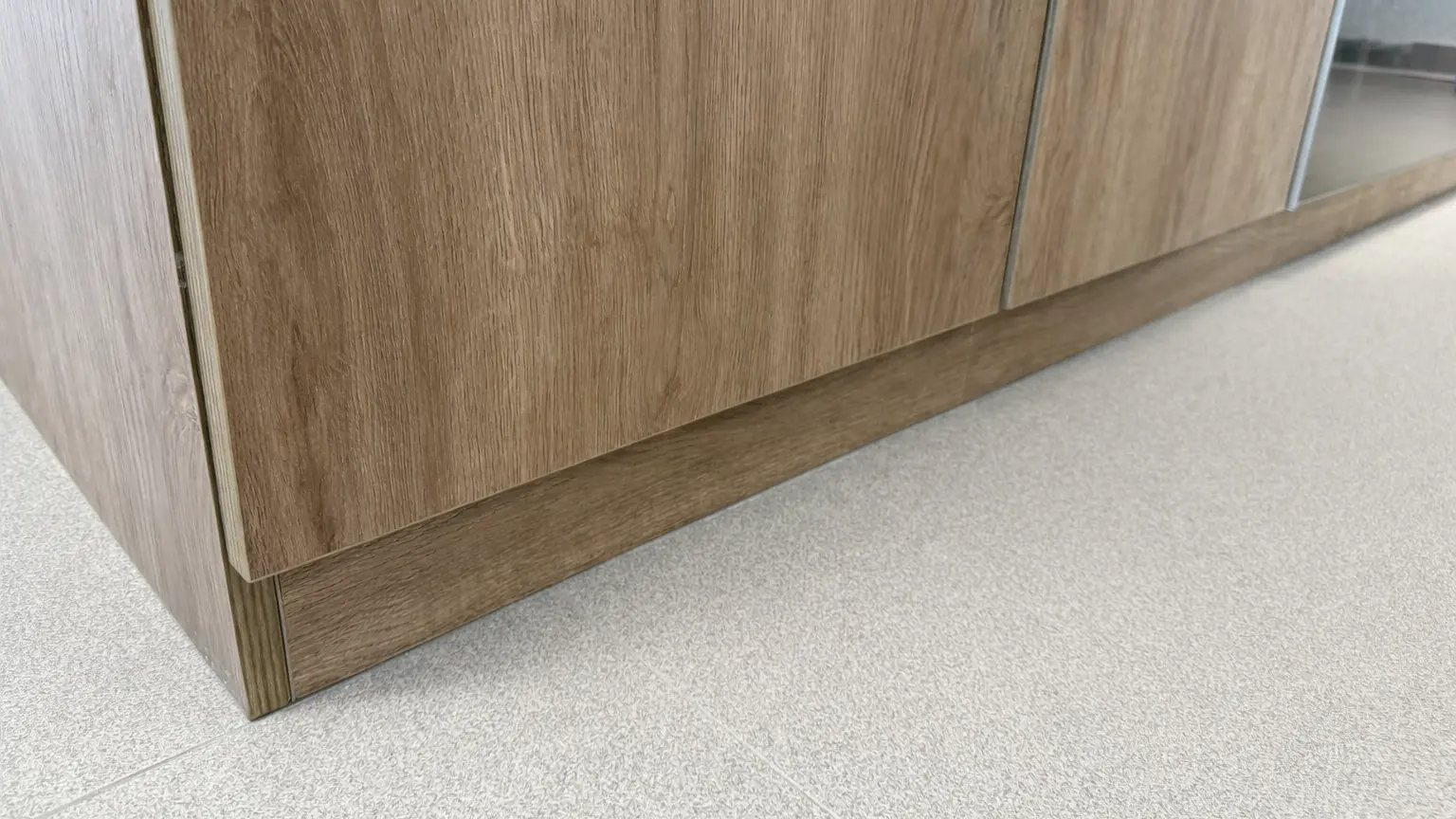
The Appeal: Seamless, Premium Look
Placing wardrobes directly on the finished floor creates a clean, fully integrated aesthetic. There are no visible gaps, no legs, and no interruptions — the wardrobe feels like part of the architecture.
This approach aligns with current interior trends favoring minimal, built-in furniture.
The Hidden Risk: Moisture Damage
While visually appealing, this method comes with a critical drawback:
- Any wet mopping, spills, or seepage directly affects the wardrobe base
- Wood-based materials (like MDF, particle board, plywood) are highly sensitive to moisture ingress
-
Over time, this can lead to:
- Swelling
- Delamination
- Fungal growth
- Structural weakening
The base panel becomes the most vulnerable failure point.
This risk is especially relevant in Indian homes, where wet cleaning is standard practice.
Verdict
✔ Best for: Dry environments, luxury installations, low-maintenance spaces
✘ Not ideal for: Homes with frequent wet cleaning or high humidity
2. Leveler Adjusters
The Practical Upgrade
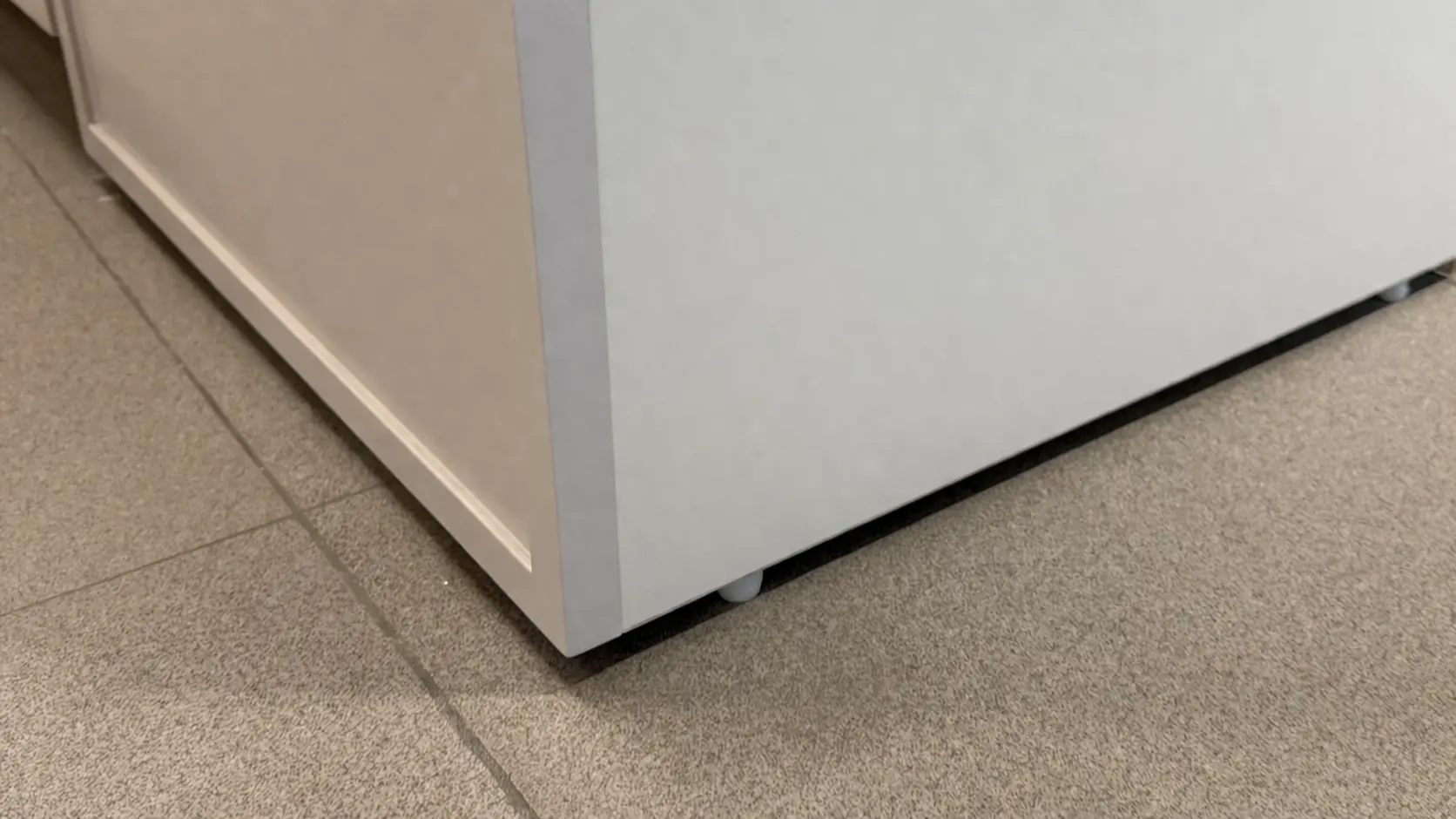
Leveler adjusters lift the wardrobe typically 20–35 mm above the floor, creating a controlled gap.
Their primary functions include:
- Compensating for uneven flooring
- Ensuring precise alignment during installation
- Providing a moisture buffer zone
Adjustable legs are widely used because they offer both engineering precision and protection.
In fact, wardrobe legs are specifically designed to isolate furniture from floor moisture and improve longevity
Advantages
- Prevents direct contact with water
- Improves installation accuracy
- Reduces stress on carcass joints
- Extends product lifespan
The Trade-Off: Cleaning Limitation
The key downside is accessibility:
- The gap is too small for cleaning tools
- Dust, debris, and insects may accumulate underneath
- Over time, this becomes a hygiene blind spot
Verdict
✔ Best for: Most modern homes, practical installations
✔ Strong balance of durability and cost
✘ Limitation: No access for cleaning under the unit
3. Plinth Legs with Removable Skirting
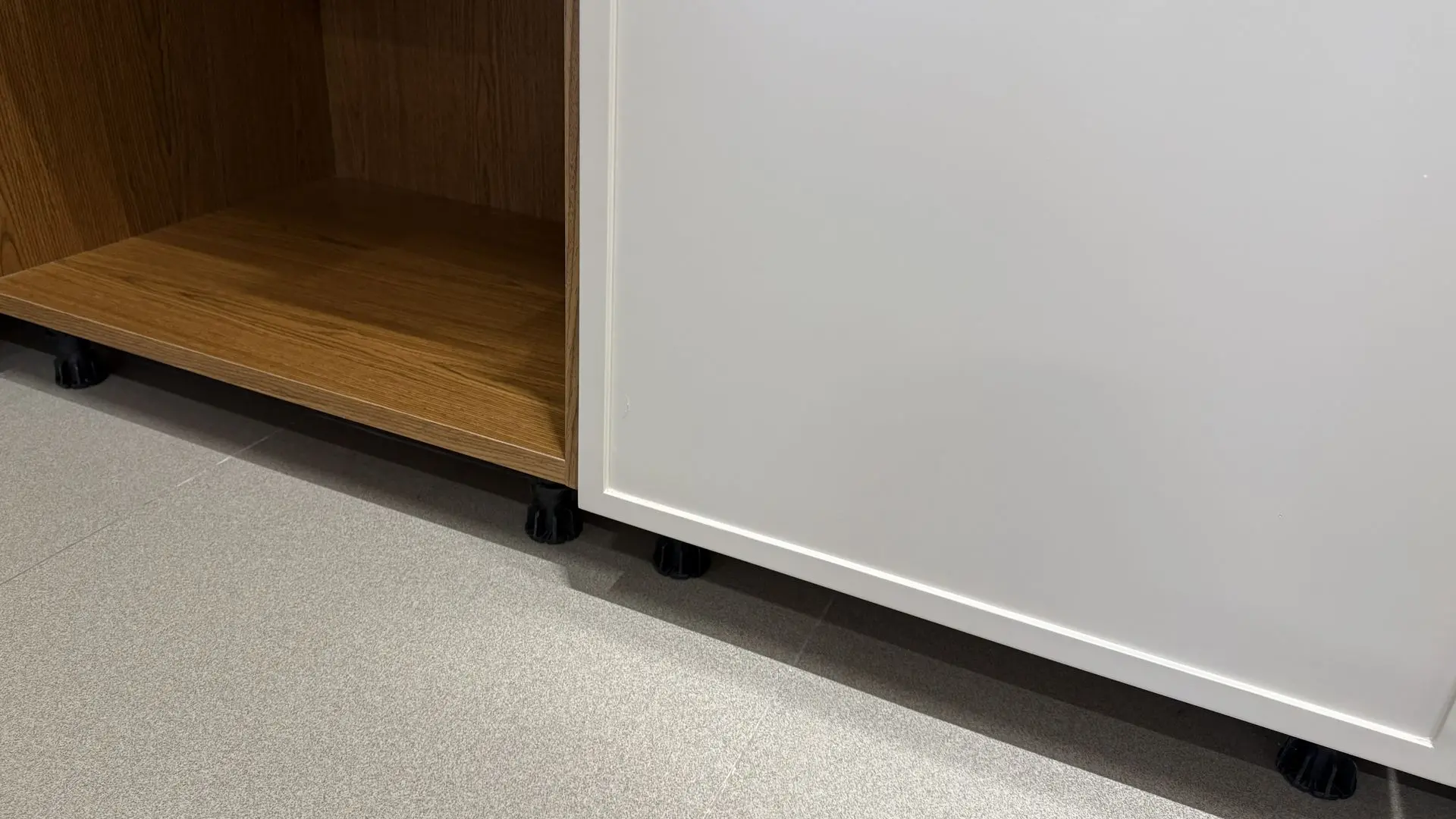
The Engineered Solution
This is the most advanced and functionally complete wardrobe base system.
It combines:
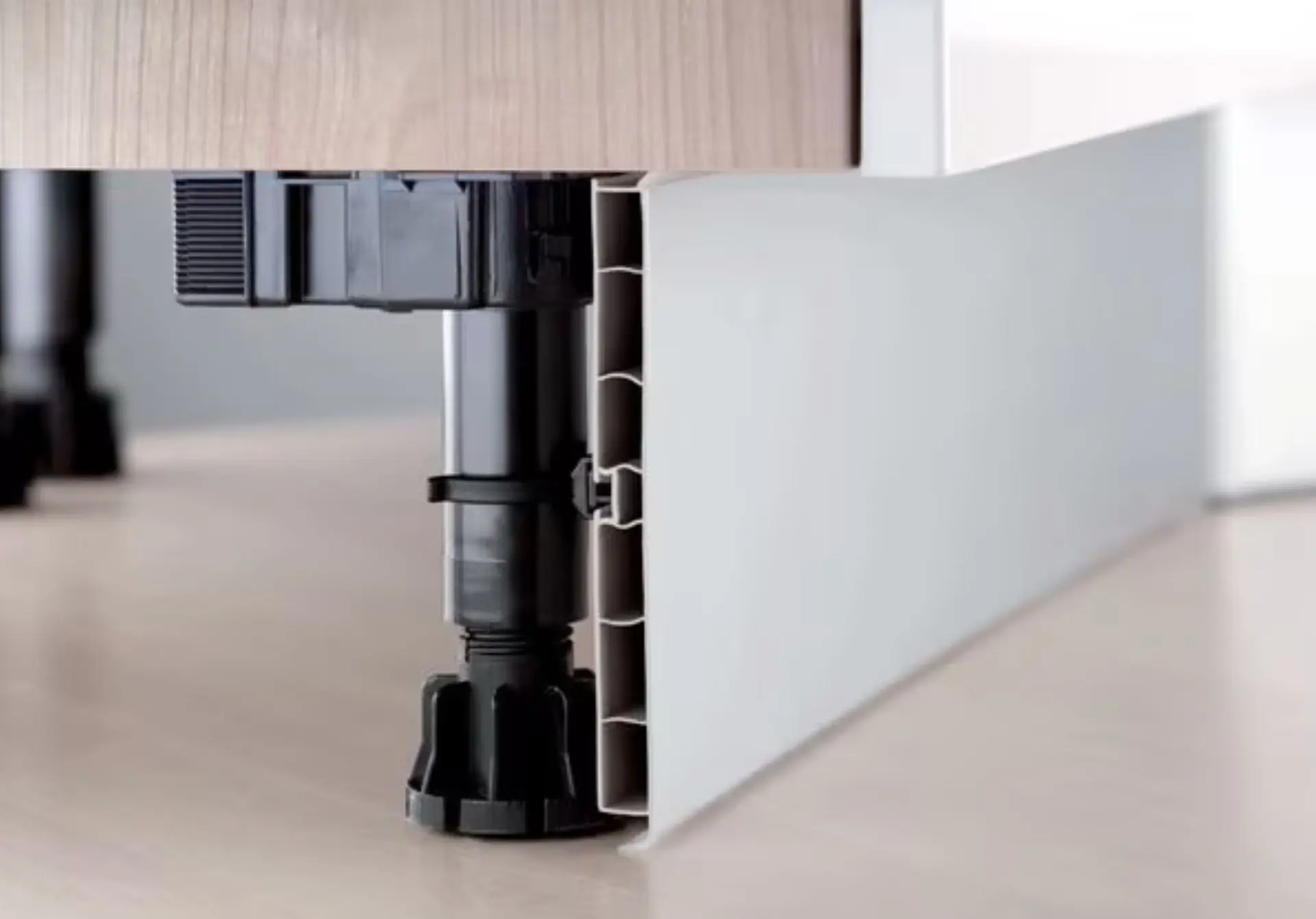
- Structural legs (typically ~100 mm height)
- A front skirting (plinth) that conceals the legs
- Removable access panels
A plinth acts as a raised base that protects furniture from moisture and uneven floors while maintaining stability
Why It Works Best
This system solves both major problems seen in other options:
1. Moisture Protection
- Wardrobe is fully elevated above floor level
- Prevents water contact entirely
- Protects the carcass from long-term damage
Plinth systems are specifically designed to protect cabinetry from moisture, dust, and wear at floor level
2. Cleanability
- Skirting is removable
- Allows full access underneath
- Enables proper cleaning and maintenance
Additional Benefits
- Hides legs for a clean, seamless look
- Maintains a “built-in” aesthetic
- Improves ventilation below the unit
- Allows easier servicing and adjustments
Verdict
✔ Best for: Long-term durability, hygiene-conscious homes
✔ Ideal balance of aesthetics + engineering + maintenance
✘ No seamless floor-to-ceiling look of side panels
Comparison Table: Which Wardrobe Base is Right for You?
| Criteria | Floor Mounted | Leveler Adjusters | Plinth Legs + Skirting |
| Aesthetics | ★★★★★ | ★★★★☆ | ★★★☆ |
| Moisture Protection | ★☆☆☆☆ | ★★★★☆ | ★★★★★ |
| Cleanability | ★★★★☆ | ★☆☆☆☆ | ★★★★★ |
| Installation Precision | ★★☆☆☆ | ★★★★★ | ★★★★★ |
| Longevity | ★★☆☆☆ | ★★★★☆ | ★★★★★ |
| Maintenance Access | ★☆☆☆☆ | ★☆☆☆☆ | ★★★★★ |
Final Thoughts
Wardrobe design is not just about how it looks on day one — it's about how it performs after years of daily use.
The base system directly affects:
- Lifespan
- Hygiene
- Repair costs
A well-designed wardrobe should not only look premium — it should be engineered to handle real-life conditions.